G-VNE2PTQYPK kG-PPOIP_Xr6VYE6ZaIXQuigD-TwNAqq4a3H65Nlb3A Planning For Friction: How to Set Up Your Year When You Know It Won't Be Smooth - The Cognitive Performer

Episode 10

Planning For Friction: How to Set Up Your Year When You Know It Won't Be Smooth

You know your year won't be smooth. So why plan like it will be?

In this episode, I break down my 2026 planning strategy - not rigid annual goals, but quarterly focus that adapts to reality. Drawing from competitive powerlifting training, I share why backward planning works, how to maintain agency when life gets chaotic, and why 90-day sprints beat 12-month marathons.

What You'll Learn:

  1. Why structure creates agency (not rigidity) and the neuroscience of locus of control
  2. The powerlifting method: backward planning from specific outcomes
  3. Where to focus vs. where to allow variety - and why this matters for your brain
  4. Why quarterly reassessment beats rigid annual planning
  5. My Q1 2026 focus: Political voice acting and the strategy behind it
  6. How to choose YOUR Q1 focus (with examples)

Free Download: Quarterly Focus Planner

Research Cited: Amar, I.B., et al. (2023). The relationship between locus of control and pre-competitive anxiety. Frontiers in Psychology. https://doi.org/10.3389/fpsyg.2023.1227571

Episode Callbacks: Episodes 5 (Decision Fatigue), 6 (Dopamine), 7 (Rewiring for Resilience)

Your Q1 Challenge: Before January 15, pick ONE concrete, measurable focus for your Q1. Work backward to weekly actions. Execute for 90 days. Reassess for Q2.

Contact: marco@thecognitiveperformer.com

Copyright 2026 Marco Rigazio

About the Podcast

Show artwork for The Cognitive Performer
The Cognitive Performer
Unlocking Peak Performance Through Neuroscience

About your host

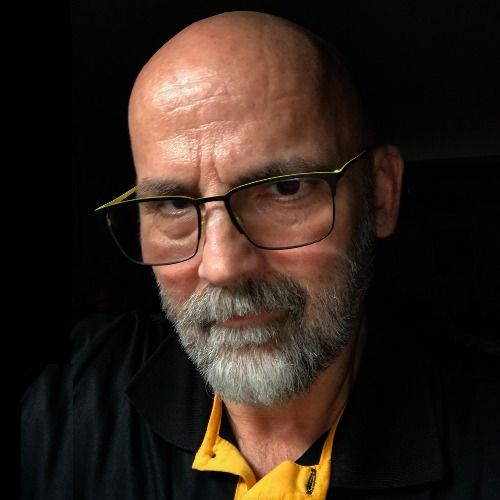
Profile picture for Marco Rigazio

Marco Rigazio

As host of "The Cognitive Performer," I blend my professional voice acting expertise with a deep passion for cognitive science to explore how our brains can enhance our creative performance and resilience.

My journey began with a Masters degree in Exercise Science, where I first became fascinated with the science of human performance. This academic foundation, combined with my years as a professional voice actor, gives me a unique perspective on the mind-performance connection.

Throughout my career, I've witnessed how understanding mental processes transforms my creative work. My experience in improv and acting classes, voice lessons and ongoing coaching to hone my skills, further deepened my appreciation for how neuroscience principles can be applied to artistic expression.

Each episode of "The Cognitive Performer" draws on this background as I interview leading experts and share evidence-based strategies on topics ranging from neuroplasticity and flow states to emotional regulation and burnout prevention.

Whether you're a voice actor, performer, or professional seeking to strengthen your "mind muscle," this podcast translates cutting-edge cognitive science into practical techniques you can apply immediately to your craft and life.

Join me monthly as we explore the fascinating intersection of brain science and peak performance.